
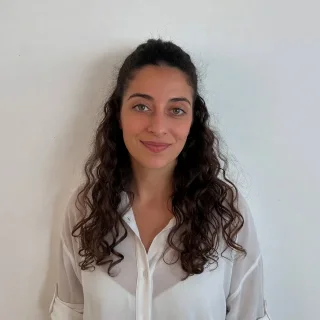
The poet and rhapsodist Maria Sevilla, born in Badalona in 1990, presents her latest poetry collection 'Neither One nor the Opposite Flower' in Seville, a book that explores desire, nature, and language from an ironic and devoted perspective.
Poet Maria Sevilla, researcher and lecturer at the University of Barcelona, has arrived in Seville to present her fifth poetry collection, Neither One nor the Opposite Flower. The recently published book has been received with interest in the Andalusian poetic circuit, where the author has participated in recitals and literary meetings. The event will take place at the Fundación Tres Culturas of the Mediterranean, in the capital of Seville, next Friday, March 12 at 19:00 hours.
A poetry collection that plays with negation and affirmation
The title of the book, Neither One nor the Opposite Flower, is a linguistic play that, as poet Juan Andrés García Román explained during the presentation, articulates a double negation that becomes an affirmation. “It is a mechanism of mirror or seesaw,” García Román pointed out, highlighting the influence of apophatic or negative theology in the work. Nature, treated with devotion and irony, is one of the central axes of the poetry collection.
Maria Sevilla, who has also experimented with sound poetry and video recitals, confessed during the presentation that the book is a “chronicle of an intimate relationship in a state of ruin.” The author, who has been programming the poetic cycle of Horiginal since 2019, has achieved with this work a blend of omnivorous desire and criticism of language as a system of power. “The greenness of the fields is supremacist,” she asserts in one of the poems, alluding to how the linguistic code colours experience.
The influence of Catalan and European tradition
Sevilla, who teaches Catalan language and literature, draws from sources such as Hadewijch of Antwerp, Paul Celan, or Karl Krolow, the latter being the author of the so-called Vogellyrik or bird lyric. In the poetry collection, food appears as a metaphor for desire: “Omnivorous means that it eats everything, the desire to eat,” the poet wrote, in a tradition reminiscent of Sent Soví or Joan Vinyoli. For the Seville reader, this connection with Catalan lyric may seem novel, but the author has managed to bridge with contemporary Andalusian poetry.
The presentation event will include a reading of poems and a discussion with the audience. Attendees will be able to purchase signed copies from the author. The organisers expect a high turnout, given the growing interest in young poetry in the city.
An Orphic song that celebrates pantheistic joy
Despite its apparent complexity, the book is, according to its critics, “joyful and pantheistic.” Music and song appear as an escape from language, an emotional dimension that embraces traumas. “Song is not used for the same things we use language for every day —bills, cost of living, Excel documents— no, it is the emotional dimension, in a state of exception,” García Román wrote in his analysis. For poetry lovers in Seville, this presentation represents a unique opportunity to meet one of the most original voices in the current landscape.
Entry is free until full capacity is reached. It is recommended to arrive early. The Fundación Tres Culturas is located in the Pavilion of Morocco, at Calle Max Planck, 2, Isla de la Cartuja. The event is part of the 'Poetry in Seville' cycle, which brings national and international authors throughout the year.
You may also like


